


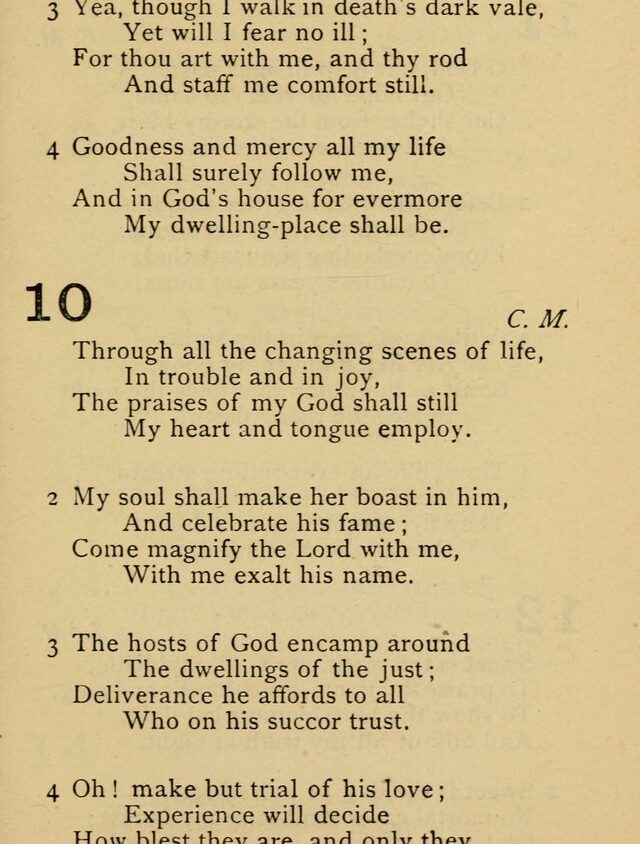
A Song of Unwavering Grace: Through All the Changing Scenes of Life
The history of hymnody is a tapestry woven with threads of human suffering, profound revelation, and the relentless pursuit of the Divine. Among these sacred compositions, few possess the enduring resonance and theological depth of “Through All the Changing Scenes of Life.” Based on the beloved Psalm 34, this hymn stands as a timeless monument to the character of God—a steady anchor in the turbulent, ever-shifting landscape of the human experience.
To engage with this hymn is to embark on a journey of introspection. It invites the listener to move beyond the superficiality of daily burdens and contemplate the overarching sovereignty of a God who is both present in the storm and the architect of our eventual peace.
The Biblical Foundation: Psalm 34
At the heart of the hymn lies the profound testimony of King David. Psalm 34 is often described as a song of deliverance. Written during a period of intense personal danger—when David was forced to feign madness to escape the wrath of King Achish—the Psalm serves as a defiant cry of praise born in the crucible of fear.
The hymn translates David’s ancient struggle into a universal language:
“I will bless the Lord at all times; his praise shall continually be in my mouth.” (Psalm 34:1)
This verse is the engine of the hymn. It demands that faith not be a seasonal accessory—a cloak we wear only when the sun is shining—but an inherent state of being that persists regardless of the “changing scenes” of our lives.
Theological Depth: God in the Flux of Time
The beauty of this hymn lies in its realistic assessment of life. The title itself, “Through All the Changing Scenes of Life,” acknowledges a fundamental truth: constancy is not the absence of change, but the presence of God within it.
The Sovereignty of Providence
In theology, the concept of Divine Providence teaches that God is actively involved in every detail of the universe. The hymn does not promise a life without “trouble and sorrow.” Instead, it promises that the believer is never outside the sphere of divine care. When the “scenes” shift—when health fails, when relationships fracture, or when uncertainty looms—the hymn reminds us that God’s character remains immutable.
The Liturgy of Gratitude
The hymn shifts the focus from the problem to the Provider. By encouraging the congregation to “bless the Lord at all times,” it functions as a corrective to our natural inclination toward lament. Gratitude is portrayed here as a spiritual discipline—a choice made in the valley that prepares the heart for the mountaintop.
Musicality and Atmosphere: A Sacred Solace
From a musical perspective, the hymn is often paired with the tune Wiltshire, a melody that balances dignity with a poignant, soaring grace. The structure of the verses creates a rhythmic cadence that mirrors the ebb and flow of life itself.
The opening notes are usually somber and reflective, mirroring the weight of human experience. However, as the hymn progresses, the melody lifts, echoing the promise of salvation. It is a masterclass in musical storytelling, guiding the singer from the confession of need to the declaration of hope.
A Contemporary Reflection: Why We Need This Hymn Today
In our modern era, we are bombarded by a pace of life that feels intentionally fragmented. We are constantly navigating digital transitions, global anxieties, and personal disruptions. We live in a culture that prizes stability, yet we are haunted by the reality of our own fragility.
“Through All the Changing Scenes of Life” offers a radical counter-cultural message: You do not need to control the scenery to find peace.
Finding Stillness in the Whirlwind
When the world demands our panic, this hymn demands our praise. It suggests that our value is not determined by our circumstances, but by the “angel of the Lord” who “encamps around those who fear him.” This imagery of the divine encampment provides a profound sense of safety. It implies that we are not merely observed by God; we are surrounded, protected, and ushered into His presence.
The Fellowship of the Faithful
Singing this hymn in a communal setting—a church sanctuary or a small group—serves a vital social function. It reminds us that we are not suffering in isolation. As we sing the words together, we are acknowledging that every person in the room is also navigating their own “changing scenes.” This creates a shared vulnerability that transforms into collective strength.
A Personal Invocation: How to Engage with the Hymn
To truly appreciate this hymn, one must look beyond the lyrics on the page and allow them to become a prayer. Consider these steps for a deeper engagement:
- The Psalm Study: Begin by reading Psalm 34 in its entirety. Note the contrast between David’s distress and his declaration of praise. Identify the specific “scenes” currently playing out in your own life.
- The Silence: Before singing or listening to the hymn, spend a moment in silence. Acknowledge the transitions—the good, the bad, and the confusing—that have brought you to this moment.
- The Proclamation: Sing or recite the hymn as a declaration of intent. When you sing “I will bless the Lord at all times,” you are making a vow to your own soul that your trust in God will survive the next chapter of your life, whatever it may bring.
The Horizon of Hope
“Through All the Changing Scenes of Life” is not merely a nostalgic artifact of the past. It is a living, breathing testament to the resilience of faith. It teaches us that while the landscape of our lives is destined to shift, our anchor remains firmly lodged in the bedrock of eternity.
As we traverse the inevitable highs and lows of our journey, may this hymn be the song that rises to our lips. May it remind us that we are never lost, never abandoned, and never beyond the reach of grace. In every change, there is an opportunity to see God more clearly; in every scene, there is a reason to offer our praise.
As the final notes fade, we are left with the quiet assurance that no matter where the path leads, we are walking in the company of the One who changes not, the One who is the same yesterday, today, and forever.