


Holy, Holy, Holy! A Hymn of Eternal Majesty
“Holy, Holy, Holy! Lord God Almighty!” – These words have echoed through cathedral arches and humble prayer closets alike for over two centuries. More than a mere hymn, it is a transcendent invitation to enter the presence of the Living God. It stands as a profound testament to the majesty, sovereignty, and triune nature of the Almighty.
1. The Theological Essence
Written by Reginald Heber in the early 19th century, the hymn was designed to lead the worshipper into a posture of deep adoration. The repetition of the word “Holy” three times is not merely poetic; it is a profound declaration of the Trinity: God the Father, God the Son, and God the Holy Spirit.
The Contrast of Attributes
Heber masterfully balances the transcendence of God with His intimacy:
- The Almighty (Mighty): Acknowledging God as the Creator and Sustainer of the universe.
- The Merciful (Merciful): Recognizing that the same God who holds the stars in place reaches down to comfort the broken-hearted.
2. A Liturgical Journey: The English Text
The structure of the hymn follows a progression from morning praise to an eternal perspective of worship.
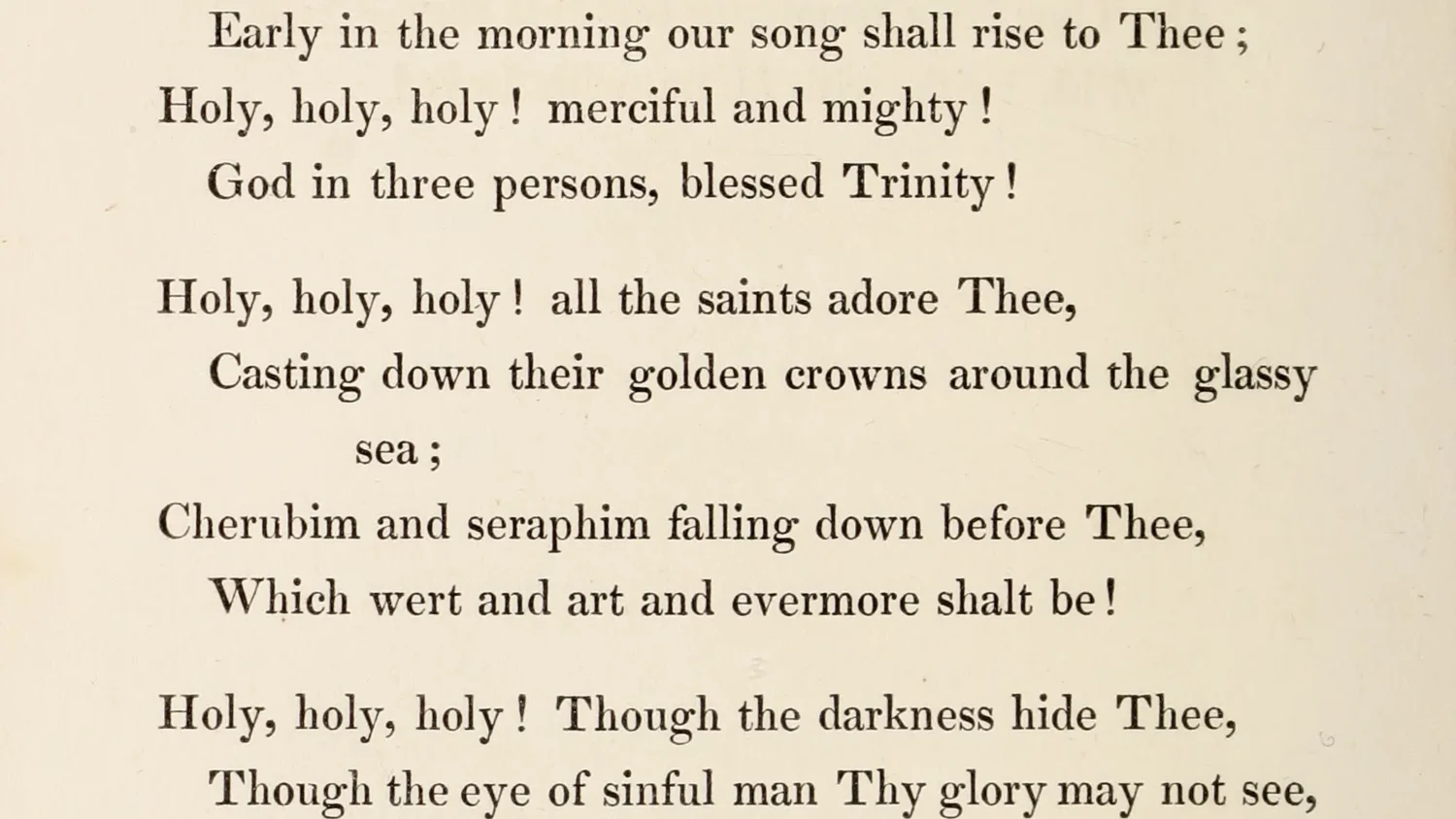
Holy, holy, holy! Lord God Almighty! Early in the morning our song shall rise to Thee; Holy, holy, holy! Merciful and mighty! God in three persons, blessed Trinity!
Holy, holy, holy! All the saints adore Thee, Casting down their golden crowns around the glassy sea;Cherubim and seraphim falling down before Thee, Who wert, and art, and evermore shalt be.
Holy, holy, holy! Though the darkness hide Thee, Though the eye of sinful man Thy glory may not see;Only Thou art holy; there is none beside Thee, Perfect in power, in love, and purity.
Holy, holy, holy! Lord God Almighty! All Thy works shall praise Thy name, in earth, and sky, and sea;Holy, holy, holy! Merciful and mighty! God in three persons, blessed Trinity!
3. Depth and Sacred Significance
A Morning Offering
The opening lines invite the worshipper to dedicate the first fruits of their day to God. By singing “early in the morning,”the believer centers their heart before the chaos of the world takes hold. It is a deliberate act of surrendering time and focus to the Creator.
A Vision of Eternity
The second stanza draws from the celestial imagery of the Book of Revelation. It reminds us that our earthly worship is an extension of the heavenly host. We are invited to join the Cherubim and Seraphim in acknowledging the One who “wert, and art, and evermore shalt be”—the Eternal Present.
Faith Amidst Darkness
Perhaps the most poignant line is, “Though the darkness hide Thee.” It speaks to the human condition—the moments when life feels silent and God’s presence seems veiled. The hymn does not deny the darkness; instead, it declares that God’s holiness remains absolute, regardless of our limited human perspective.
4. Why This Hymn Endures
The power of Holy, Holy, Holy! lies in its lack of ego. Unlike modern worship songs that often center on personal feelings, this hymn centers entirely on the nature of God.
- Universal Truth: It transcends cultural, linguistic, and denominational boundaries.
- Humility: It forces the listener to abandon their own concerns and gaze upward.
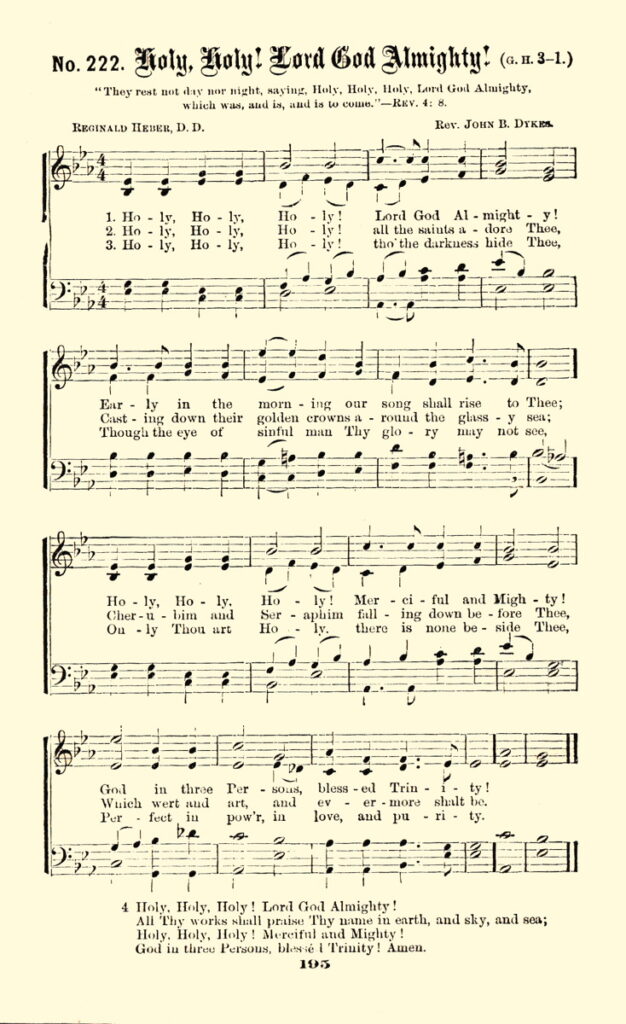
- Awe-Inspiring: The composition by John B. Dykes (titled Nicaea) provides a soaring, majestic melody that complements the lyrics, lifting the spirit toward the divine.
5. Integrating the Hymn into Your Life
- The Morning Routine: Begin your day by reciting the first stanza. It serves as a spiritual anchor, framing your day within the context of God’s sovereignty.
- In Times of Trial: When life feels heavy or confusing, return to the third stanza. Remind yourself that God’s love and purity remain perfect, even when you cannot see the path forward.
- A Daily Benediction: Let the final, triumphant refrain be a reminder that all you do—your work, your relationships, and your rest—is an offering to the One who is worthy.
To sing Holy, Holy, Holy! Lord God Almighty is to participate in a sacred dialogue that has spanned generations. It is an act of alignment, where our small, fleeting lives meet the weight of God’s eternal glory. As you engage with these words, may you find not just a song, but a sanctuary—a place where you are reminded that God is, indeed, holy, merciful, and always near.
How has this timeless hymn shaped your understanding of God’s character during your own seasons of worship?